
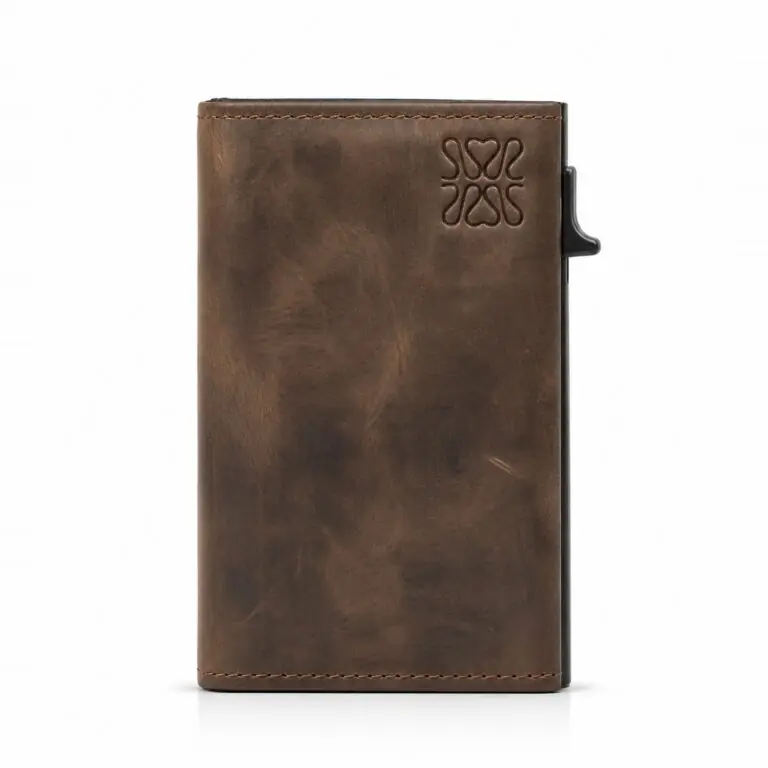
The Truth About What You Carry
Why we set out to bridge the gap between honest craftsmanship and everyday value.
When you have spent your entire life around leather, your hands learn to read it before your eyes do.
Coming from India as a longtime leather and leather goods manufacturer and global exporter, I have spent years on tannery floors and production lines, making products for markets all over the world. When you live in this industry, it only takes three seconds of holding a piece of leather to know its entire story: which part of the hide it came from, how it was tanned, whether the grain is natural, and whether it is going to age beautifully over ten years or fall apart in ten months.
A while ago, I was in Barcelona meeting with a group of local designers. Between meetings, we spent days walking through the city’s shopping districts, doing hands-on market research and inspecting what was sitting on the shelves. Honestly, what I saw bothered me deeply.
High prices, hidden compromises
Store after store, I picked up leather goods carrying hefty price tags. To the everyday buyer, they looked sleek under the boutique spotlights. Wait a few months, though, and that illusion fades. What was being sold at premium prices was mostly low-grade, heavily corrected leather. These were leftover splits sanded down, stamped with an artificial grain, and buried under a thick coat of paint and polymer just to look uniform.
That is when the value gap hit me. People were not buying bad leather because they wanted to; they were buying it because nobody was telling them the truth. Brands were banking on the fact that the average consumer does not know the difference between full-grain, oil pull-up, or nubuck leather and a cheap hide masked in surface chemicals. Customers were paying high prices, and they were getting shortchanged on quality.
The “sustainable” lie we need to talk about
As frustrating as the quality gap was, something else happening in the market outraged me even more: the aggressive rise of artificial leather being marketed under the banner of “vegan” and “sustainable.”
“People have already consumed the meat. If the hides left behind are not used to make durable leather goods, they are simply thrown away. Meanwhile, replacing them with polyurethane-coated synthetics only adds to global plastic waste.”
Here is the truth most marketing campaigns leave out: real leather is a byproduct of the food industry. No cattle are raised just to make a wallet or a bag. Because people have already consumed the meat, those hides exist regardless. If we do not take them and tan them into long-lasting goods, millions of tons of raw hides are thrown into landfills. Utilizing real leather is not destroying nature; it is humanity’s oldest and most effective form of upcycling.
Now, look closely at what is being pushed as the “eco-friendly” replacement. Whether it is standard faux leather or the latest trendy fabrics made from apple peels, cactus, or pineapple leaves, they are formed and heavily coated with high amounts of polyurethane (PU). At the end of the day, PU is plastic. Within a year or two of daily use, that plastic coating cracks, peels, and flakes. It cannot be repaired.
| Real high-grade leather | “Vegan” and fruit-infused synthetics |
|---|---|
| Upcycled byproduct. Uses hides left over from the food industry that would otherwise go to waste. | Plastic dependent. Formed fabrics coated with high amounts of polyurethane (PU) to hold their shape. |
| Built for decades. Develops a rich natural patina over time and molds to your daily carry. | Short lifespan. Surface plastic peels, cracks, and delaminates within 12 to 24 months of use. |
| True sustainability. One piece lasts for years, reducing overconsumption and landfill waste. | Environmental waste. Frequent replacements add directly to non-biodegradable plastic pollution. |
Bridging the gap in Barcelona
I did not want to just complain about the industry. I wanted to offer a genuine alternative. I partnered with a Catalan local, Lluc Gudnason, to bring two worlds together: my direct, uncompromising control over leather manufacturing and export, and Barcelona’s sharp design sensibility.
By connecting our manufacturing floor directly to you, we cut out the layers of middlemen and inflated retail markups. We decided to offer leather products at the same accessible prices people are already paying, but crafted from vastly superior leather that guarantees real, lasting value to the final consumer.
Our promise to you
- Uncompromising hides. Real, high-grade leather, never cheap splits or synthetic imitations.
- Real sustainability. Respecting the natural cycle by turning existing food-industry byproducts into pieces built to last for years.
- Guaranteed value. You pay for superior leather, precision hardware, and skilled craftsmanship, not an artificial markup.
We built this brand for people who appreciate the weight, the feel, and the honesty of the real thing. Thank you for being here, for looking past the marketing noise, and for choosing quality that lasts.
Warmly,
Abu Zar
Founder, in partnership with Lluc Gudnason